Unpacking: Menopause and Chronic Pain
Why can pain suddenly feel harder to manage in your 40s or 50s - even when scans show nothing new?
Pelvic health physical therapist Dr. Anne Collins Duch joins Holly Osborne and Dr. Megan Steele to explain how hormonal fluctuations during perimenopause and menopause may affect the nervous system, joints, sleep, pelvic health, and pain sensitivity.
The conversation explores menopausal hormone therapy, vaginal estrogen, bone health, chronic UTIs, and why treatment decisions should be based on each person’s risks, symptoms, and goals. You’ll also learn why strength training does not have to mean lifting the heaviest weight possible, and how bodyweight exercises, resistance bands, heel drops, and modified movements can still support muscle and bone health.
Anne and Megan also share practical ways to work with pain rather than pushing through it, including improving sleep, supporting bowel health, adjusting exercise during a flare, and tracking small signs of progress. If menopause has changed how your body feels or responds to movement, this conversation offers a more flexible path forward without asking you to give up the activities you love.
Guest: Anne Collins Duch, PT, DPT
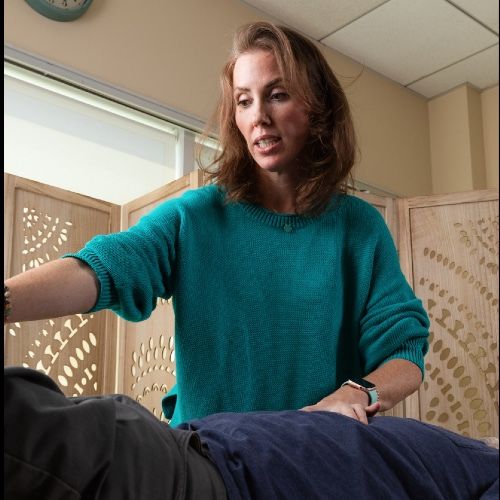
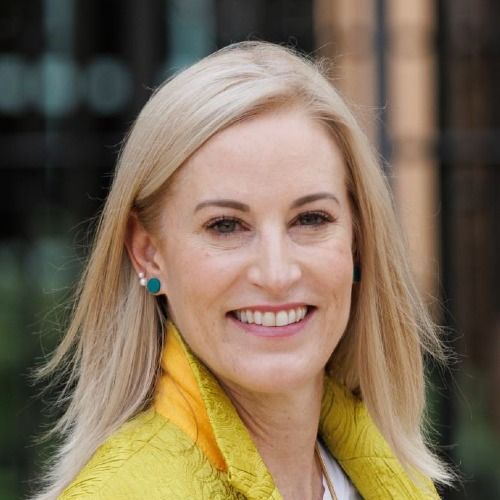
Dr. Anne Collins Duch is a board certified pelvic health physical therapist and an E-RYT 500 hour yoga teacher with 27 years of experience in treating a wide variety of pelvic health conditions. Her Wilmington, Delaware private practice is housed within a vibrant yoga studio where she is able to educate her patients and yoga students on the benefits of establishing a sound movement practice that integrates effective nervous system regulation strategies for a more complete whole body experience.
Dr. Duch has a special interest in the Polyvagal Theory, which led to the development of her virtual course offering, What Happens in Vagus Doesn’t Have to Stay in Vagus: Nervous System Regulation Course. She served as a panelist at the Endometriosis Summit, the Elhers Danlos Global Learning Conference, and the Pelvic Global Menopause Conference and presents to various professional organizations and fellow clinicians about pelvic health topics, as well as the use of vagal toning strategies as part of their health and wellness management.
Links to interesting things from this episode:
Transcript
Women in their 50s and beyond.
We're working longer, our careers are thriving.
We're sandwiched between caretaking for the generation above us and below us.
A lot has always been expected of women, but it's just more so than ever.
And it used to be like, you know, you put someone out to pasture, she's 50.
You know, give me a break.
Like, you know, some of us in our 50s, thank you very much, are just coming in to our best years.
And, you know, it's not enough to just be out there playing tennis again.
We expect to be cognitively sharp.
We expect to show up and work a room.
We expect to be able to manage high levels of stress and still be successful in our relationships.
Intro:Welcome to Unpacking Pain, a podcast dedicated to understanding the complexities of chronic pain, what causes it, how it affects our lives, and what we can do about it.
Join Doctor of Physical Therapy and Pain science researcher Dr. Megan Steele and me, Holly Osborne, a chronic pain sufferer, as together we explore the biological, psychological and social aspects of chronic pain and create community and understanding in the process.
Megan:I am so excited to introduce our podcast guest today.
Dr. Anne Collins Duch is a physical therapist with 27 years of clinical experience, 25 of them focused on pelvic health.
tified in pelvic Health since:Her approach is shaped by years of working with complex, often dismissed conditions like endometriosis and Ehlers Danlos syndrome, alongside her own experience navigating a difficult medical recovery.
That combination of clinical rigor and personal insight has made her a trusted voice for people whose symptoms don't fit into a tidy diagnosis, including the many overlapping physical changes that can come with menopause.
Dr. Duch holds a doctorate in physical therapy, a 200 hour yoga teacher certification, and has taught extensively in physical therapy continuing education.
She is the creator of "What Happens in Vagus, doesn't have to Stay in Vagus," a nervous system regulation course, and continues to build educational resources that help people understand what is actually happening in their body.
Welcome and my friend Dr. Duch to the Unpacking Pain podcast.
Thank you so much for joining us.
We're here to talk about menopause and the menopause transition, which is a huge component for many people suffering from chronic pain.
As we've talked about, women are more commonly diagnosed with chronic pain.
They're most often diagnosed during that midlife or menopause transition time period.
And so I'd love to hear from you, Ann.
Maybe we'll just start there.
Can you tell us about where the science is about why women are most often diagnosed around that time?
Anne:Yeah.
Thank you for having me.
This is my favorite thing to talk about.
I've been doing this for 30 years, so I followed women.
I have a lot of folks that I've worked with through different transitions in their life.
Some I met as teenagers.
Like, this is how long I've been doing this, Right.
And they had a couple babies, and then I've watched them, or they've come back to me with whatever chronic pain situation they've been dealing with into perimenopause now and then.
I work with people that are postmenopausal, so I've been able to see these different transitions throughout most of a lifetime at this point.
And what we see is the vulnerabilities that come up.
And I know we're talking about menopause, but we.
We'd be remiss to not bring up the postpartum period, because many times postpartum and menopause, perimenopause, we know that they're very similar hormonally to some degree.
If we're lactating postpartum, we take a diet.
Megan:It's kind of like a mirror image of each other.
It is.
Anne:And then we can go further back and say puberty is just the increase in all these hormones coming in.
And then peri.
Perimenopause and menopause obviously is the decrease, but the decrease looks like this, right?
It's not a steady decline.
It's the chaos of the up and the down, the chaos of postpartum of having the highest level of estrogen you're ever going to have in your whole body.
And then postpartum, it tanks.
Megan:Precipitous.
Drop.
Yeah, drop.
Anne:And this is where we see, you know, mood disorders come in.
We see aching through the whole body.
And again, I know we're not talking about postpartum, but then we see this again in the perimenopause and menopause transition, where it's this precipitous up and down of hormones.
It's your body trying to take its last stand to push out the remaining eggs in the ovary.
Your brain's trying to say, like, I know there's still more down there.
And the brain makes the system go into overdrive and really, it's the perimenopausal transition where we see this ultimate chaos happening.
The up and down, up and down, up and down.
And then eventually we bottom out.
And that's where some of that chaos settles to some degree.
That's where we're left with the joint pain, the genitourinary syndrome of menopause, all the things we hear about pelvic floor pt.
So treat a lot of pelvic pain and pain with any type of pain, penetration and dryness and itchy and those types of things.
And it's due to that decreased estrogen that we have estrogen.
Estrogen receptors through our whole body.
And those estrogen receptors are just kind of saying, hey, where are we?
And when the body's been searching for that estrogen and it's not finding it, then some crankiness, I like to say the crankiness ensues.
You know, tissues get cranky.
And if you're someone who came into this time frame with some sort of persistent pain situation, you don't have the protection of that estrogen, which also talks to the nervous system to help kind of keep you steady.
Megan:So that's okay.
Holly:Can we, can we spend another minute on that?
Right there.
Am.
Anne:Love to.
Holly:Estrogen has a role in either alleviating pain or.
Yeah, let's have you say that again.
Anne:Yeah.
Estrogen is a very protective hormone.
And again, we're talking about estrogen.
We have many hormones in our body, and it gets dumbed down a bit during perimenopause and menopause to just estrogen and progesterone and sometimes testosterone.
But we're going to talk about estrogen here.
The nervous system and the endocrine system.
We call that the neuroendocrine system.
Right.
They're always speaking to one another.
Hormones send signals throughout the body.
They're chemical kind of messengers that help our body function in certain ways.
And when those hormones decrease, those messages get a little bit of cross talk.
So we don't have the protection that estrogen usually provides.
It provides protection a lot to our bones especially.
It provides protection to our joints, our brain.
I mean, we could go through every system of the body, our heart, and when that estrogen goes up and down and up and down and up and down and eventually bottoms out, we're missing a little component, a big component, actually, that protects the system.
And Megan, you could probably go on and on about the inflammatory system and how that plays into chronic or persistent pain and more, more, more notably the nervous system.
But those things intersect and when they're not there to bounce ideas off one another, the system can get a little bit chaotic.
Megan:Yeah, I really like the way of talk, that way of talking about it and that way of framing it.
I think that makes a lot of sense because there is so much dichotomy.
And estrogen is not the polar opposite of testosterone, but they affect each other and estrogen is affected by and affects the nervous system and the inflammatory process and things like that.
Yeah, it's.
It's a really complex situation.
And I love when you see on social media, it's just this one supplement that you need and that will solve all of your.
Anne:Yeah.
Megan:All of your problems.
I know there was a study that came out recently that talked about estrogen supplementation and how important that can be for lifespan for women.
Are you familiar with this study?
Anne:I am.
So let's talk about hormones, hormone replacement therapy.
And it's been, it's trying to reframe it, call it menopausal therapy, you know, trying to repackage it to get it away from the bad connotation.
apy got way back in the early: Megan:Should we talk about that breast cancer connection?
Yeah, that's a good.
Anne:Yeah, yeah.
So, huge study.
NIH did a study.
It was very well funded, sort of poorly done, meaning there was no control group, really.
And huge study where they looked at the effects of hormone replacement on women.
A couple years into the study, they stop the study and they basically send out the message that hormone replacement is bad because it increases breast cancer risk, it increases heart attacks, it increases strokes.
Megan:Regardless of past medical history.
Anne:Right, regardless of past medical history.
And more importantly, over the next 20 years, when they did retrospective breakdown of the data that they had collected, what they found was there were three kind of cohorts in this study.
There were folks that were just coming into menopause, so they were perimenopausal.
There were folks that were within 10 years of menopausal onset.
And then there were folks outside that 10 year window all the way up to like 80, 80 years of age.
So you had this subset of folks who'd been away from hormones for a pretty long time, a decade, 15 years, 20 years.
And what they found was that group of, of women did poorly.
There were increased rates of breast cancer.
There were increased rates of stroke and, and cardiac disease.
That group was already at risk for that.
Like that's higher in that group of guardians.
What they didn't have was a control group of all these different categories.
Holly:Right.
Anne:That is the message that got put out there and I was working.
I had just begun working in public health at that time.
It was: Megan:Wow.
Anne:We went about 40% close.
A little in the mid-40s, if I remember correctly, of women who were eligible for hormone replacement, down to less than 5%.
Megan:Wow.
Anne:That persisted for 20 years.
So if you were a doctor who was trained during that time, you were definitely a person going through menopause during that time.
The discussion about hormone replacement therapy was, it's bad.
Now, retrospectively, when they looked at that whole group, what they found was the breast cancer risk was actually lower in that admission that that group that was perimenopausal coming into menopause and quote all the different numbers for you, but it wasn't.
It wasn't what was reported.
There's a book, and I cite this book, Estrogen Matters, and they break down that study really well.
If you, if anybody's interested in doing a deep dive or being able to have a conversation with their care provider about hormone replacement therapy, that's the book to read.
Holly:And is that for even just for kind of the average everyday gal, like, who's maybe not okay, so it's not as like science language.
It's just.
Anne:No, it's a.
It's a little sciency.
But they.
They've written it for.
Is written by two authors.
One is an oncologist who spent years and years and years treating women with breast cancer.
His wife then got breast cancer and had a very difficult time during her recovery and basically said, if I knew I was going to have to live like this, I would have chosen no treatment.
And he spent the rest of his professional career really diving deeply into the breast cancer part of this.
And his wife ended up going on hormone replacement therapy, changed her life, all those things.
And then the other person who wrote this book is a.
She's in the mental health world.
She is a psychologist who was looking at mood disorders and things like that.
So hi written this beautiful book and like I said, if it.
It does a deep dive on all the things that went right with that study, all the things that went wrong with that study and what we were left with in its.
In its wake.
So now we know in talking about hormone replacement therapy, there are different delivery methods.
Right.
We can take systemic hormone theory, and that would be.
It travels through our whole body.
So that would be a pill that would be doing a patch or that would be a gel on the skin.
So you get Transdermal hormones.
You've got topical hormone therapy, vaginal, topical hormone therapy and that is a localized treatment for the vaginal tissues, the vulvar tissues, the vaginal tissues and the urethra.
It cuts chronic UTIs immensely and that's where we get into the life saving part of chronic UTIs become a huge issue for folks in later years.
So we, we're saying that preventatively and I feel like I say this every day.
I had a 51 year old woman in my office today.
She's menopausal, she's got all the things, she's got chronic UTIs, she has itchiness, burning pain with, with penetration and her gyn's telling her to just use lube and it makes to p out of my skin.
Not the treatment for this.
We have to affect the tissues.
It's worth mentioning too with topical vaginal estrogen cream.
It is safe and effective for all.
Even if you've had some sort of breast cancer where they say you can't do systemic hormones is a localized treatment that does not go systemically into your whole bloodstream.
So I like to hold that up there too.
Megan:Really important note.
Absolutely.
Yeah.
And I even have seen patients with like a 20 year old history of breast cancer who are now going through menopause who are, it's a hard fight but are getting on systemic hormone replacement therapy and, and just being closely monitored by their doctor because it makes such a tremendous difference in their quality of life.
Yeah, yeah.
Anne:And this is where we get into individualized care.
Having an actual conversation with your care provider and saying what is my risk to benefit ratio?
Megan:Right.
Anne:For me, bone health in my family is.
Osteoporosis is a huge problem in my family.
For me, being on estrogen is so it's, that is so important to me for the bone protective aspect that it outweighs.
I don't have any other relative risk.
But these are the things we have to think about for sure.
Holly:Especially considering, I mean Megan, you hit on it with the lifestyle change.
Women in their 50s and beyond, we're working longer, our careers are thriving.
We're sandwiched between caretaking for the generation above us and below us.
A lot of is a lot has always been expected of women, but it's just more so than ever.
And it used to be like, you know, you put someone out to pasture, she's 50, you know, give me a break.
Like, you know, some of us in our 50s, thank you very much, are just coming in to our best years and it's not enough to just be out there playing tennis again.
We expect to be cognitively sharp.
We expect to show up and work a room.
We expect to be able to manage high levels of stress and still be successful in our relationships.
You know, and so anyway, I just, I think we, we together can't emphasize enough how important it is.
And now that there's a life saving component to it, I mean, this, this has just become, you know, a zero sum game.
Like.
Megan:Yeah, yeah.
Can you talk a little bit an about how the vaginal estrogen has been shown to be life saving?
Is it the fall risk with chronic UTIs?
Anne:It is both.
Okay, so chronic UTIs, yes.
Fall risk.
We know when someone's experiencing urinary urgency or incontinence, their gate actually changes.
Megan:Right.
Anne:They, they're thinking, what's a divided attention?
They're about their bladder, they're thinking about.
And this is on a, on a level they don't even know they're doing it.
And we've seen the studies where if you're constantly thinking about an internal organ in a way that's kind of panicky, that you're thinking, oh, where's the next bathroom?
Where can I get to the bathroom?
How can I, how fast can I get there?
Oh gosh, there's a line that will change the way that you move through the world.
There's that piece, there's actions, the UTI piece of this where folks get an, a raging bladder infection and end up in the hospital because of it.
And we know if we end up in the hospital with anything, yikes, you know, we're not getting what we need.
And then the chance of that, of you becoming septic down the road becomes a, becomes a thing.
So we're looking at this from the sepsis standpoint.
We're looking at this from the fall risk standpoint.
So it's, it's multifaceted, but it's got.
Megan:It enormous hospital, acquired infection, etc.
Holly:Etc.
Megan:Etc.
Right?
Holly:Yes.
Yes.
Megan:Yeah.
Wow.
So that's actually kind of the primary area of my research is how do our visceral organs affect our musculoskeletal system?
And you know, I'm, I'm trying to show that connection and from a pain perspective to say, if I give you a pain stimulus in your vaginal canal, does that change your hip mobility?
Does it change your dorsiflexion strength?
And we're looking at your HRV throughout.
Throughout.
Excuse me, but you're thinking about it also from a divided attention perspective.
That's Something I hadn't actually thought about.
Anne:Can you say more about your.
Or is that you're not there yet?
Can you say more about what you're finding?
Megan:Well, no, I'm still in data collection, so, yeah, I haven't analyzed it yet, but it will be faster.
Yeah.
Based on previous research, which, you know, they use probes in the rectum, they use them in the esophagus.
They haven't done.
They, They've seen connections between visceral organs, but there hasn't been much on the visceral musculoskeletal connection.
So there was one study in:And it was a small study, I think only 21 participants, but they had one who had pain in a sciatic nerve distribution.
Anne:Interesting.
Yeah.
Yeah.
Oh, I, I think this will be huge.
This will be huge.
Megan:I just need participants.
But that's a, that's a topic for another day.
Anne:Yeah, I bet you.
Holly:And talk a little bit more about bone health and what we're seeing.
Hormone replacement.
I, I guess there's.
Say again, the new phrase for it.
Anne:It's not hrt, it's a puzzle Therapy.
Yeah, hormone therapy.
Holly:Well, so, yeah, we, we've kind of.
We understand that our bones become more frail over time.
How big of a game changer is it for a woman to be big game changer?
Anne:And I'd like to point out it's not just hormone.
You know, we're looking at all the different strategies.
Megan:Right.
Anne:Hormone replacement therapy is helpful.
Menopausal hormone therapy, we want to be strong.
All the things that we focus on, we want to make sure that we're maintaining our muscle mass.
So that requires not just replacing hormones.
That requires challenging those bones and muscles and lifting.
We want cardiovascular health to stay strong.
We want to think about what we're eating and sleeping.
All the strategies that we talk about are, are important.
So for folks that absolutely have been ruled out as, as someone who can't use hormone or therapy, hormone therapy, replacement, I just want to make sure they understand there are lots of other things that you can lean into.
That said, we know the largest loss of bone occurs in the years right around menopause.
And in the United States, the average age of menopause is 51.
So it's in those years following, three years following.
And unfortunately, folks aren't getting DEXA scans until they're 65.
That's when it's recommended in the United States make that make sense to me, ladies.
Megan:Yeah.
Really doesn't the math Isn't mathing on that one thing.
Anne:And some would say, like, well, what's the DEXA going to change?
Well, I can tell you I had a Dexa at 50 and I found osteopenia, and it has changed my behaviors.
Right.
I thought I was doing enough to move the thing.
I have a strong family history.
Knowing that has absolutely changed my behaviors.
So it's one of those things.
We want to make sure that we're doing all the things we can do.
So estrogen, if that's available to you, there's a lot of argument because again, social media is like heavy lifting.
Um, we know that moderate to heavy lifting is enough to affect bone health.
So I think when we're talking about folks with chronic pain, a persistent pain type of situation who can't lift, quote, unquote heavy, they feel dismissed because, like, well, if I can't lift heavy, then I guess it doesn't count.
And I'm here to say that is just not true.
Moderate to heavy is enough to affect muscle mass and bone.
We know this.
But again, it doesn't sound as good on the sound bite on social media.
Holly:So help us break that down because I'd love to demystify this.
So, you know, we think I got to move heavy weight.
Moderate to heavy doesn't sound all that radically different.
So I'm not like bs, but it sounds like we're kind of just still in the same.
Anne:Yeah, it's a little bit of splitting hairs, but it came down to heavy lifting.
If you're not heavy, if you're not lifting heavy enough that you're challenged by three to five reps.
So an 85% one rep max, if we're getting.
We don't need to get that specific.
But if we're not lifting enough that three to five reps causes you to fail at the lift, then it's not heavy enough.
And we know it's not so much about that.
If we want to talk about 8 to 10 reps at a moderate weight, it's about moving that weight, loading yourself to relative failure.
So that that last couple reps that you do, this has not changed.
Like, we've.
We've been saying this forever, but those last couple reps that you do should be really hard.
It's keep your form, but it should be really hard.
Megan:And then you couldn't do 10 more.
Anne:You couldn't do 10 more.
So if it's going to be three to three sets of eight to 10, you couldn't possibly do another set.
You've, you've lifted volume wise quite enough.
Right.
Holly:And that's still prohibitive.
Thank you for clarifying.
That's still prohibitive for someone who's, you know so well.
Someone.
I'll be specific.
I can't lift more than 15 pounds in my right arm.
I have a reverse total shoulder replacement.
So we have to start progressing.
I mean £10, £12, £15.
I ain't browning, but it's easy for me, but I can't progress press.
So how does someone you know who's either been told not to move weight at all, can they use therabands, can they use isometrics?
Like does that not count as weight?
Or you know, how could someone else get creative about coming at it?
Anne:It all counts.
I would say variability will be the spice of your life.
Holly:Right.
Anne:And it should be the spice of everyone's life.
But then, then mix it up as much as you can with regards to if you can't do a certain lift with a certain over the £15 and you've kind of maxed out there, do something different.
Do I know that sounds ridiculous, but try something different.
Do it.
Row in a different way or do whatever.
Whatever the 15 pound limitation is.
And I know this sounds super general, but I think we've made it so we, we've framed this.
Not me, but we frame this so much that like if you're not doing this exact thing, then you might as well not even bother.
Megan:Yes.
Holly:Right.
Megan:Yeah.
Anne:The way that it is.
Megan:That's so great.
Anne:Who have osteoarthritis, they can't grip things.
You know, I have them.
That's the person I might put in a weight vest and have her do some squats in a weighted vest.
We could go on about weighted vest because that's been completely taken way out of context.
But for her, she's got some bone health issues and she's got osteoarthritis.
So I want to make sure that I'm challenging her in a way that she can recover from a first and foremost, but that she also feels a challenge to the degree that is beneficial to her.
Holly:Right.
Anne:I'm sorry, this is not like a specific answer, but like mixing it up as much as possible.
Holly:Really great information.
And here's a dumb question for you.
Do we have to move if we're wearing around a weighted vest?
Which I agree, I have to giggle with you guys.
That's gotten totally out of control.
It's like, watch me make gourmet ice cream in my weighted vest need to go away.
But if.
If we're doing something in one part of the body that's weight bearing, can it affect and help the bones throughout the whole body?
Or it's just specific to that leg or that bicep that you're working?
Anne:So, Megan, do you want to answer that?
Megan:Go ahead.
Anne:Okay.
I can speak to this.
You know, looking at some of the data, too.
Again, Megan and I are data, data, data nerds, but there is a study called the liftmore trial.
It's kind of the.
The study that's quoted the most when it comes to bone health, osteopenia, and osteoporosis.
And the Lift More trial was trying to find four basic exercises that would help load the system so that the spine and the hip, especially because those are the areas where we see bone loss, were challenged and would affect bottom bone there.
And what they did was they did a back squat.
So they had a barbell.
Holding a barbell up here.
You can do that with little weights.
You can do that with just something that puts load resting.
So you're getting this axial loading.
You're getting loading from the top down.
And they had them do squats with that.
Right.
And then the second exercise was a deadlift.
So down in front of you, picking up a bar and putting it back down with knees bent.
And then the third exercise was an overhead press of some sort.
Right.
And the fourth exercise was impact training.
It was some sort of jumping.
They had it.
They dropped off a bar and landed on the ground, meaning a hanging bar.
And they had them land with soft knees so they were getting some impact when they landed.
That's not right for everyone, but there's ways to scale that, right?
Heard of something called a heel drop.
Basically, you come up on your toes and you drop down to your heels.
We have good data to support that.
That is very bone stimulating.
So those were the four exercises.
So if we were going to break it down and try to keep it somewhat simple, those would be four exercises to maybe focus on if they're in your wheelhouse, if they're not, mix up that, you know, find some variability in what you're doing.
And it might be that you start with body weight exercise.
I have a dowel rod here because I just had a woman, no weight.
It's just a plain old dowel rod.
And we just went through what it feels like for her to take this bar, squat up and down with just the bar.
We had her do deadlifts and Then had her do an overhead press so she could see what this feels like.
That's where she's going to start.
That's it.
Holly:Yeah.
Anne:That's awesome.
When we can load a little more, we'll load a little more.
And not until she's ready.
Holly:I guess what I'm wondering is, is that sufficient then for.
Does that have a positive effect on all bones in the body like we.
Megan:Yeah.
Holly:Or is it just helping that one joint?
Anne:Yeah.
So that lithmore trial, they found better spine bone density, less in the hip.
Megan:It.
Anne:It's all about the angles.
Holly:Right.
Anne:We have to challenge the bones.
The muscles that attach to the bones have to be challenged in a bunch of different directions because it's actually the bones, the muscles pulling on the bones at their attachments that help build bone turnover.
So to answer your question, I would say no, it's not going to be protective of every bone in the body.
But that's why we need some of that variability.
That's why if you're someone who can get on your hands and knees.
Hands and knees is a modified plank.
Holly:Right.
Anne:About.
If you go on hands and knees, like you're going to crawl, that's a modified plank.
From there, you might walk your hands out and do a plank with your knees down, loading onto the hands and the wrists, if that's available to you.
Holly:Right.
Anne:Getting.
Stimulate.
Getting weight bearing exercise through the wrist, through the arms.
That might be a place for you to start.
So it's.
And then mixing up those exercises.
I hope I'm answering your question.
Holly:No, making.
So make making so much sense.
And I love also that you've reminded us what the bones, what the bone areas in the body are most vulnerable.
So like we know women have that happen in hips.
Like we've, you know, that's, that's common.
But.
Yeah.
Tell us more about that.
Anne:So spine compression of the vertebra.
So compression that's common in osteoporosis.
I shouldn't say common.
I don't know what the.
I don't know the numbers offhand, but that's what we see a lot where you have a compression fracture, meaning the vertebrae went like that.
Wrists, people fall balance.
Megan:Okay.
Anne:Forearms, those are the big areas.
Holly:All right, listeners.
So, you know, like, if, if you don't know how to do those exercises that Ann just mentioned, get.
Get chatgpt involved or something, I think that sounds like a really reasonable place to start.
Like how that's not daunting.
Do four moves, you know.
Megan:Yeah.
And I think I would add in, you know, the, the muscle pulling on the bone, certainly, and then the gravity and the forces from the ground.
I'm getting ready to teach biomechanics.
So of course, I'm like lever arms and forces.
So there.
There are like.
Like you say, the heel drop, the force that your body has to resist from dropping against the hard surface of the ground, creates change in your bone.
Right.
Bone responds to the forces that are placed upon it.
And that's why I think people got a little in the weeds with the weighted vest.
If I'm walking with a weighted vest, essentially, that's more weight with every step.
But, you know, a 10% body weight weight, and fast, which is typically what we recommend people to start with, really isn't enough to move the needle terribly much.
And then people go way the other way and say, do I need to be doing box jumps?
I'm 75 years old.
I've never done that before in my entire life.
Apparently, my personal trainer from Equinox tells me I need to be doing box jumps.
Holly:God help us.
Megan:Yeah.
So, yeah, I. I really appreciate you kind of clarifying that for us.
Thank you so much.
And if we could get back to a little bit about the.
The hormones and the fluctuations.
So I love Dr. Jen Gunder, who talks about, you know, menopause is a part of life.
It's a normal transition.
Just like.
What's that word?
Shoot.
Puberty.
There we go.
Had a little pregnancy brain myself here.
And so the interesting thing, from my perspective, is some of the pain research shows us that men and women have similar pain thresholds and pain tolerances before puberty and after menopause.
And it's that in between time where women have lower thresholds and lower tolerances for pain.
Do you see that in your postmenopausal population?
And how do you reconcile that?
Anne:It's interesting.
There is, I guess, the thing we should throw out there too, And I think Dr. Gunter talks about this a lot too, is there is a period of time.
It's the chaos of perimenopause.
And then we get with the definition of menopause is right one year after your last period, which is also kind of a ridiculous definition.
But it's what we have when we get a little further away from that date, things seem to level out with regards to the brain fog.
Sleep disruption is pretty tricky.
And I really think when we're talking about these periods in our lives as women, professional goals, raising kids, all the things you're doing right now, Megan, raising kids, being pregnant, being postpartum our sleep starts to take a hit even before the hormonal stuff starts happening.
And when the hormonal stuff starts happening, oftentimes sleep becomes even more chaotic is the only word I can keep coming up with.
But unpredictable is probably a better word.
And we know that's going to affect the neuroendocrine system and how you manage pain.
Megan:Right.
Anne:So component part of this.
And we talk about what can you do to help a painful situation, honing in on that sleep.
And that can be a daunting thing because, you know, you need good sleep, better sleep, and then you go, I can't get good sleep.
Ah, what am I doing?
And then you're up at 3 in the morning, I need to be asleep.
This is going to cause me.
And then it becomes this panic thing.
Right, Right out the door.
Holly:Total cycle.
Anne:Yeah, yeah.
So back to those periods of times where, you know, we're in this chaotic period and we've got all of these things happening.
Of course, course we're not going to manage pain quite as well.
To answer your question, though, I see it clinically leveling off in the years post menopausally.
Again, maybe not to your baseline, but definitely after we get beyond.
And everyone's a little different, but beyond a couple years.
Megan:Yeah, got it.
So it's not the level of hormones, it's the, the swings.
Anne:We got it.
You got it.
It's the up and the down and again, the way puberty works.
I wish I would have brought this graph for you all, but we see puberty hormones going up and down and gradually getting higher and higher and higher.
And then we see the cycles kind of regulate, right?
They're up and down and up and down.
And then in perimenopause, cycles are happening, but they're coming down, they're going up, they're coming down.
It's a little one, it's a big one, it's a little one, it's a big one until eventually it, it, it teeters off.
But it's that up and down where we see all of the things.
And oftentimes that's happening before anybody has validated that it's happening.
Anybody other than the person experiencing it.
Right.
You go to a medical provider and they say, well, you're only 44, this can't be menopause.
And we know this can be upwards of a decade.
So all that does is you take someone who's having these difficulties and everyone's telling them, I don't see anything.
No, we don't.
Your Hormones look fine.
And it's because maybe they check the hormones at a certain time in their cycle.
It's not helpful to do that because we don't know exactly where you are.
So then that becomes a whole other.
Put that on the pile, the list of things to perseverate about.
Megan:Right.
And then do you think the sleep component of it becomes like a learned response?
Anne:Yeah, something.
I think you're onto something.
Yep.
Yeah.
It becomes a habitual thing.
Well, I can bring it back to pelvic health.
Right.
You wake up, you're.
I go to the bathroom.
You get up to go to the bathroom.
You're doing that during the childbearing years.
Right.
So you've already learned to disrupt your sleep during those childbearing years.
And I'm not sure for a lot of people that ever recovers then throw in chronic pain and other things and then we come into this, this, you know, fluctuating situation where now we're having hot flashes or we're having something in the middle of the night that wakes us up.
Now we got to go change our clothes or we've got to go to the bathroom.
And then it just becomes now we've just learned to disrupt it the whole time.
Megan:Yeah, yeah, yeah.
And I remember hearing a recent story of someone whose child, you know, they had one of those non sleepers, which everybody knows, somebody that has a kid that just will not sleep.
And as someone who had a first child who Knockwood slept.
So we're hoping, we're hopeful.
And she had a period where then the child started to sleep, but they went back because there was an illness.
And she felt what it felt like to be chronically sleep deprived for I think a week.
And she thought, how did I ever survive this?
Anne:Yeah, yeah, that's real.
That's real.
And Holly, you can speak from your personal experience.
If you've had sleep deprivation, managing any type of pain or any type of situation, that's, that's discomfort, uncomfortable, whatever you can, you know how that is.
It makes a difference.
Holly:Yeah, it really does.
Especially in terms of how many resources you have the next day to deal with that pain.
And Megan and I have talked a lot about sort of pain perception and sort of where you are, you know, kind of in your self awareness that having resources or a lack thereof is the difference in that, that extra bit of Runway that you need to get through a pain day or to be bigger than the pain sometimes because you have to still function, you have to still pick up those kids, you still have to do that public speaking, you still have to, you know, lead that meeting or show up at your parents care, care home or whatever it is.
Right.
So we don't, we don't get to just crawl in bed and watch Love island, although that would be amazing.
So, yeah, I think that's the biggest thing is just noticing that when you wake up the next day, pain rears its head in, in a way that feels that you can't manage it.
Right.
Which, which would be true for anything like stress or marital challenge or financial stress.
Anything that you wake up with is going to be worse when you haven't slept.
But the other thing I was going to ask too, for both of you is why I think, I suspect that so many people in pain are sleeping on the wrong mattress, have the wrong pillow.
It's like, I know if I spend one night in a hotel that I can feel my shoulders on fire the next day.
And so I feel like that just.
Ann, you've been giving lots of sort of widening the aperture education today to say if this doesn't work for you, try these other things.
And so I think this is one of those things I would say is attack your sleep challenges with everything you've got.
You guys are the experts with the data, so you could say yes or no on this.
But I think sleep is the foundation for everything.
If that gets knocked down, good luck trying to fix that by having a great diet, you know, a very healthy diet and a very this and that.
Like, I think you lose the sleep.
You're.
You're done.
Megan:So from a chronic pain perspective, it's so hard to move the needle if you can't sleep.
And interestingly, people are, I find in my practice, and you can chime in here, but I find them to be more often than not resistant to sleep hygiene because I want my screen in my bedroom.
I want to be looking at my screen until the moment before I close my eyes.
I want to eat in my bed.
I want, you know, my husband doesn't like it when it's.
When the temperature is 72 to 68 degrees.
You know, it's, it's really hard to get people to change their sleep hygiene.
But if you can get the message across that this is such a crucial, critical, integral part of your recovery, then you've gotten, you know, maybe 25, 35% of the way there.
And I think like, this mom that I was describing, we don't always recognize it because it comes on so slowly and gradually that it's not until you get to this point where you've had good sleep for a bit, and then you lose it and you go, oh, my gosh, I used to feel terrible.
How did I tolerate that?
Anne:Correct, Correct.
I would add sometimes, and I don't have one on the wearables.
Can we talk about those?
Because I think sometimes wearables can be a helpful thing for folks to take in what's happening.
And then sometimes I see more often than not, at least in my practice, the wearables just add another component of anxiety.
Listen, if you have a couple bad nights of sleep, y' all know what you feel like.
I don't think we need a wearable to say, like, your sleep recovery was terrible.
And I have one woman who is obsessed with her sleep debt.
Megan:Yeah.
Anne:And even the term sleep debt makes me anxious, and I'm not a super anxious person.
But when I think about sleep debt, will I never be able to get out of that?
Like, what is happening?
Holly:Where do I pay?
Where do I submit my pay deposit?
Anne:I don't know what to do with this.
I don't like to be in debt.
She's obsessed.
So I said, listen, dude, just humor me.
We're gonna go three nights.
Three days and nights.
No wearables.
If you want to track your steps, go ahead, but I could talk about that another day.
No wearables in the bedroom.
Just humor me.
Holly:Just.
Anne:Let's see what happens.
Megan:Prove me wrong.
Anne:Yeah, prove me wrong.
And let's just do the.
The.
This sleep hygiene that we talk about.
And let's just see.
And yes, there's going to be just, like, when you take the binky away from a.
From a baby, there's going to be three days of not feeling great.
But by that third day, you're like, you know, do I really need that?
I'm not sure.
So that's one of the things I feel like I always have to bring up wearables because people get so focused on what's happening here, and we're losing that interoception, the ability to feel.
What are you feeling in your body?
Megan:Yes.
Anne:What is this telling me?
I feel in my body?
Like, no, let's not do that.
Right.
And I would add.
The only other thing I would add when we're trying to.
When I'm trying to get people to buy into how important the sleep is, you will hear every person that comes into my space.
I will ask them, what are your bowels doing?
And how is your sleep?
Those are two vital signs for me.
Right.
Check your blood pressure.
We can check your heart rate.
We can do all those things.
I want to know what are your bowels doing and what is your sleep?
And that tells me much of what I need to know about what your nervous system is doing.
So.
Right.
But that's.
We know that how you're churning underneath all of this other stuff that's happening.
If we can get to that and start affecting that and have the buy in be like, okay, let's just start really seeing what's going on with your sleep and your bowels and go from there.
Holly:Ladies, has there been a link, a positive correlation, or maybe that's even the wrong term?
But what is the link between gut health and persistent pain?
Is that a link?
Anne:Go, Megan, go.
Megan:Well, there are a couple links.
So, interestingly, when people have digestive issues.
I think we've talked about this, Holly, in our nervous system episode.
If.
If I am too high on the fight or flight level of my nervous system, I have.
My body has two options to release me of all contents, either from the top or the bottom, or I shut down the whole system and I don't poop for five days.
So I have a Bristol stool scale chart in my office as well.
Some people feel squeamish about it.
I say it's like a menu.
When you don't know how to pronounce the item, just point.
Right.
Where are you on here?
This tells me a lot.
Right.
And how often.
Right.
And what's the quality and how hard are you having to work and things like that?
So it tells us a lot about, are you able to get into rest and digest?
Is that available to you?
Are you so far on that fight or flight scale that you're throwing up three times a day or you're having explosive diarrhea five times a day, all of which I've seen in my practice.
And I completely agree with Ann that that's often a great place to start.
And I've had people come back to me and they say things like, you know, my knee kind of feels the same, but I had a great BM this week.
You know, I'm like, progress.
We're on the road.
Yeah.
Yeah.
So I think, you know, nervous system, you've got to start at the nervous.
I mean, we could talk about microbiome and mental health and things like that.
I mean, there are many, many, many layers, gut, brain access, etc.
But I think that's kind of like the basic version of it, essentially.
I don't know.
Tell me what you have to add, Anne.
Anne:Oh, I agree.
I agree a thousand percent with Everything you're saying, it's never just one thing.
Megan:Right?
Anne:So, yes, but the nervous system is a huge component.
I see a lot of folks with overactive pelvic floor and that is a whole other component.
We're talking about gut stuff, you know, constipation.
Um, if the muscles at the base of the pelvic floor are telling the, the gut above, like, hey, don't come down here, that will slow your motility as well.
So it's that top down that you, you've already talked about.
But top down, bottom up, what's happening?
Um, but yeah, I, I feel like bowels and sleep have to be talked about like they're best buds, kissing cousins.
Cousins.
So if we can get a buy in, in one area and all we have to do is see a little bit of a change in a positive direction and then we start rolling a little bit.
Yeah.
Holly:You know, that actually gives me something that I want to throw out there to listeners in pain in.
Sometimes we don't see improvement or the gains if we've been chronic for a really long time.
Right.
And you might plateau or not feel like it.
How about we challenge ourselves?
Let's do this together.
You don't have to sign anything, but just spiritually.
What if you made your bowel health or bowel regularity or your sleep hygiene your next thing that you want to improve and measure and conquer?
I know a lot of us have lost the ability to kind of be as competitive athletically as we'd like.
And so we need a challenge.
We need something where we have to graduate to the next step and the next step.
What if we start challenging ourselves on that and say, like, I don't care how many muscles I've got in my bicep or how much I'm getting stress under control, if I can't have a week's worth of decent BMs, like, I'm not there yet.
Right.
So, you know, or tackle sleep.
Maybe hard to tackle both at the same time, maybe overwhelming.
But like, how about we challenge ourselves on those things?
Anne:I love that.
I love that.
I think if you tackle sleep, you'll, you'll, it'll go tackles a pretty far word to go.
But if we start, you know, managing sleep a bit, you're going to see the bowels change and then, then maybe pain changes.
Etc.
So yeah, I love that.
Megan:I agree.
And I have people keep sometimes a WINS folder or a WINS notebook because in chronic pain, you know, you have these myriad of symptoms that are affecting you and our nervous systems are so tuned in to pain or to discomfort or to something that is not functioning, that we're not always tuned into the absence of that.
And so sometimes at, you know, progress note time, oh, it's been six weeks since we started.
Let's check in on some of these things.
And people go, oh, yeah, right, I forgot I was having an issue there.
Or, you know, I've had somebody say to me, I've done this travel recently.
And the fact that I was able to.
Kind of.
Getting back to your point, Holly, about the mattresses and the pillows, I've been able to sleep in these different hotel rooms.
I've been able to sleep in different pillows, different lighting situations, different noise levels, and I'm doing it.
And those are huge wins for somebody who has sensory sensitivity, who's had chronic pain for so long, who feels like I can only sleep in this narrow window of complete darkness with earplugs and all my sound machines and my air conditioning blowing directly at my face.
You know, so things that, like, increase your bandwidth for change or for irritants or I guess, like different.
Different conditions I think are big wins that we don't always recognize.
And so bowel movements can be one way to say, I had a weird week with my pain, but my bowel movements stayed consistent.
And I'm going to put that in my wins column.
Anne:And as providers, being a witness to that is one.
I think you can have all the techniques in the world you can do.
We've talked about this, Megan.
You can be the fanciest PT in the world, but these things, being witness to these things that seem little to the person that's in front of you, but, you know, those are huge.
And being witness to that and making sure folks know, that's amazing.
My favorite thing is to get a text where someone says, you know what?
I just had the best poop of my life.
Like, nothing makes me happier, and I'm okay.
I can sleep well tonight.
They, you know, maybe not.
It's like my, you know, pregnant folks have a baby and let me know they had their baby, but I'm pretty excited about the poop, too, and not gonna.
Holly:Yeah.
Anne:Yeah.
So I. I love that.
Thank you for that, Megan.
It's worth repeating that.
I think those of you, Holly, who've been experiencing persistent pain, it is really hard sometimes to see those wins in a way that maybe you should.
Holly:I love the fact that you're there for the atta girl and the atta boy, both of you, you know, or the out of the, out of them, you know, that just to say, like, hey, we are going to be looking at all the things that you're doing.
Because this, you know, and that's part of the education, I think, of them realizing that they can adapt.
You know, like Megan, that person who was figuring out how to manage these different hotel rooms, they probably had a lot of anxiety before going on that trip, you know, we do anyway, because travel can be stressful, as exciting as it is.
But when you're living with persistent pain, travel is very nerve wracking.
You're.
You're already imagining how much your suitcase is going to mess you up, how much your laptop bag, that tiny seat, bending down to pick something up.
Oh, there goes my neck.
Megan:Right.
Holly:And so we kind of need to acknowledge that there are things that we can control.
Like, and then having that win when you adapted to something, I think proves that you can adapt through this.
Like, you aren't stuck.
Megan:Yes.
Anne:Yeah.
Holly:So, but again, if we're not always seeing that improvement, like in our knee or in our spine, then, yeah, call Ann and Megan and tell them about your poop, y', all, and you'll realize.
Megan:We're here for it.
We're here for it.
Holly:Yes.
Megan:And I think to your, to your point, Holly, like, you and I can know this.
We can say that this airplane seat, this pillow is not going to cause you damage.
Right.
It's, you know, that on a cognitive level, but your subconscious, where your chronic pain lives, having had pain for 28 years needs proof.
Holly:Yeah.
Megan:Like, we can talk about it all day long, but until you have that proof of, I went there, I slept, I woke up, I survived.
You know, I wasn't in a flare for the rest of the vacation.
Then I know that it can happen.
Then I know that I can see a light, you know, maybe that glimmer of hope or that glimpse of normalcy.
Yes.
Holly:Yeah, we, like, talk a lot about hope and on our podcast, you know, people need that encouragement.
I've got a question for you ladies about the aches that tend to come on during the perimenopausal experience and how sometimes they don't necessarily show up as tissue damage.
There isn't a big there, there.
And yet, you know that your hips are aching or that your left elbow just, you know, I also feel it arthritically in my hands, you know, where it's like all of a sudden, you know, just a cramp in this hand that feels like I'm like an ancient crow now.
Like this gnarled hand, like what is happening to me?
So if it's not the kind of thing that warrants an X ray, or if you do get an X ray and it comes back like, hey, you're cool, what should we be doing?
What should.
What should people out there be doing?
Megan:Megan?
Holly:No, that's a great question for you.
Anne:And great, great.
So.
So we know you're going to hear me say it again.
There are estrogen.
Estrogen receptors in our joints, throughout our body.
And when we start seeing a depletion of that estrogen, tissues get cranky sometimes.
And this is more of that systemic type of discomfort, which for folks that experience arthritis, rheumatoid or osteo, I mean, we can name all the different conditions that fibromyalgia, all the things that might experience a flare during this time, hormone replacement therapy can be helpful.
And we're actually seeing orthos start to understand this.
It's going to take a while because they're hard enough to crack sometimes, but they're starting to recognize that midlife women who come in with a bunch of different areas of discomfort, there might actually be something systemic to this, ruling out the big inflammatory things, but then going, okay, if we don't see any of that, this is likely a hormonal fluctuation.
It might be a bit of change happening in muscle mass.
So we would employ the same tactics we would employ any other time.
We want to make sure we're working on mobility and we're working on nervous system regulation, and we're working on sleep, and we're working on getting strong in these different areas of the body where we have these things within the.
Holly:Within.
Anne:Within the.
The context of what you're able to do at that time.
I see this in the postpartum population constantly, and they get ignored as well.
You know, say I've got both hips hurt, both ankles hurt, and my hands hurt.
Yeah, we do, like.
Yeah, well, exactly what you're talking about.
So we work on mobility and breath work and all the things that you'd see us do when you're not in these hormonal fluctuations, but certainly in the menopausal population, some hormonal replacement might be helpful and then these other strategies that we've talked about.
Megan, what would you add?
Megan:Yeah, it's funny.
I had somebody come in last week who is, I think, going through this transition, and it was like, woke up one day, both hips, low back, pelvis, knees.
You know, nothing was different about the day before.
And it's just kind of like a sudden onset 52 years old.
You know, it's like almost a textbook example.
Not feeling strong.
I can't.
I can't exercise.
I'm usually an exerciser.
And, and a lot of times, too, people hear the advice of like, oh, exercise helps pain, exercise helps perimenopausal symptoms, etc, and so then they feel like, well, I'm not exercising, so I'm not doing it right.
And I'm the one, you know, there's a whole, whole lot to unpack there that we don't necessarily have to get into.
But she's saying to me, how can I get stronger?
And Holly and I had an episode with my mentor, Derek Swecky, last week about, you know, we need to put out the fire before we start to rebuild the house.
And I think that's where sometimes we get ahead of ourselves as physical therapists because we see these deficits in strength and we want to plug those holes, right?
Or I have an exercise for that.
And in my experience as a physical therapist who sees a lot of PT or who sees a lot of patients who have been referred from other places, I think that happens too, too fast, too soon with a lot of people.
And so then you're really just throwing logs on a fire and you're just allowing that tissue to be continually irritated.
You're, you know, you're throwing things into a sensitized nervous system that just isn't happy, and so it's not going to have a positive outcome for you.
So with these people, even though sometimes they're incredibly motivated to get moving and to stay moving, and especially when they're hearing about my bone density and my spine and my hips, et cetera, et cetera.
We need to put out the fire first and personal.
Probably some of that, yes, involves your nervous system, your sleep, your eating habits, your stress levels.
And if you are somebody who's eligible and interested in, in that, in the, the hormone therapy, that's probably going to be very helpful for you, and then we can start to rebuild, and you're going to be able to do that in such a way that that isn't going to contribute to more pain, more discomfort, more achiness.
Anne:I love that I would add this is a time, too.
And Holly, you touched on this a little bit.
Identity gets all intertwined in this.
Right?
So I identify with, you know, at one point as a big runner.
Running.
I was a runner.
I was a runner.
I was a runner.
I ran, like, ran things.
And then at some point that was not working for me.
My brain was Saying, no, I'm a runner, but my body was saying, this does not feel good, girl.
Like, this is not for you right now.
And if you've worked with runners and runners who have persistent pain, who just can't stop running, they've got to come to that point where, like, I know this is part of your identity, but again, can you just humor me?
Can we pick a different activity?
Can we go for a walk in the woods?
Like, you can be.
You can.
You can make yourself huffy and puffy in a different way.
Can we find a different way to fill that bucket for you?
That's not that.
Just for a little bit and see how that feels to your body.
Megan:Yeah,.
Anne:Sorry.
No, go ahead, go ahead.
Holly:No, no, please keep going.
I'll chime in in a sec.
Anne:And I think that identity piece, you know, I've learned to say to people, I'm not saying you're never going to run again.
If you want to run, you'll run.
But for now, we're just a little bit of a pause, a little bit of a pullback to let the.
Put the fire out, let the nervous system settle, let your bowels recover, let your, you know, all the things, and then we scale back in when the time is right.
And I know that is incredible.
It doesn't have to just be running.
It could be my crossfitters.
It can be folks in the yoga space that are just power yoga ing all the time, and they're never coming, they're never recovering.
They're always just doing the exact thing.
And that worked for them until it didn't.
And that's perimenopause oftentimes.
So, yeah, I feel like I had to say that, too.
Holly:That is exactly what I. I didn't mean to interrupt you, but I got this, like, excitement for the second where I was like.
But they could get back to it.
Like, it's not forever.
And you said it exactly.
That's perfect.
And you know what I also tell my husband? Who's like, really kind of still holding on to...
I say this with love and affection... He's holding on to his identity as an athlete, you know, from many, many moons ago as an NCAA runner.
And I have to say.
Megan:How many moons?
Holly:Yeah, exactly one or two.
But, you know, and I think that it took actually talking to him about other major athletes, recovery process processes for him to realize that recovery is athleticism.
Anne:Amen.
Holly:Mobility, when going back to the baseline, that is what the best athletes in the world do the most elite.
Look at Lindsey Vaughn.
You think that crazy chick goes back out there.
She is incredible.
She is a force and will not be taken down.
But you look at Lindsay, you look at Usain Bolt, you look at.
There was a major one that I wanted to mention, a guy.
Oh, Steph Curry on the Warriors.
These people know that their whole life is about getting back on the slopes or getting back on the court.
They have no intention of quitting basketball or skiing forever, so you don't have to either.
And.
But I think it would be very interesting, you know, if you're resistant to that.
Like, listen to a podcast where one of those athletes has been a guest.
Listen to someone who's been in recovery and you might change your mind about how you are showing up in that.
That it is badass to show up and rehab.
That it is athletic to be competitive with yourself about healing.
Like, just turn your mindset back on yourself, set challenges for yourself in that way.
But, you know, we don't need to buy into this idea that you've got to hang it up as an athlete or runner.
Anne:Right, right, right.
It's a.
It's a reframe to something else to come back later.
Or maybe you might even.
You might even find something else that you fall in love with.
A different type of.
A different type of movement practice, which.
Yeah, yeah, just.
Holly:Just don't make it Pickleball.
My God, everybody's getting so hurt every time I talk to someone who's playing pickleball, they ruin their knee.
I'm just kidding.
I don't want to demonize pickleball looks.
Megan:No, pickleball is great for business.
I love it.
What are you talking about?
Anne:It is good for business.
Holly:Seriously.
Megan:Yeah.
Holly:It's a whole new revenue stream, I swear to God.
Megan:Oh, man.
Do you have anything else an.
That you want to tell us?
Any.
Any final thoughts?
Anne:Thank you.
Thank you.
No.
This is so fun to talk about.
I appreciate you having me, having me aboard.
I feel like after I do one of these and I gotta say, oh, oh, I should have done talked about this, that or the other.
So maybe we'll do a part two.
Megan:If I think we definitely.
Yeah, yeah.
Holly:You're already invited and you're awesome and.
And it's really fun for me to.
To hear you and Megan sort of able to kind of build on each other, play off each other, and you still keep it, you know, you.
You still keep it low key for.
For the layman there.
Yeah.
Much appreciation to both of you.
Thank you so much.
And and thank you to our listeners for joining us again.
We really appreciate it.
And Ann, you'll probably like to sign off.
Dr. Megadet, I love to say when we're wrapping up, you know what, no matter how long you've been suffering from pain, if you can, if you are still breathing, literally if you can still.
Megan:Breathe, you can change your brain.
Therefore you can change your pain.
Thank you so much for being with us today.
Outro:Thank you so much for listening to this episode. We appreciate your tuning in and being part of the Unpacking Pain experience.
If this episode helped you, please share it with others. Leave us a review or let us know directly.
You can get in touch at unpackingpain@gmail.com and we'd love to hear your thoughts or questions, your stories, even topics that you'd like us to cover in a future episode. Together, we're all fostering community as we shed light on the realities of living with chronic pain and discover new ways forward.